
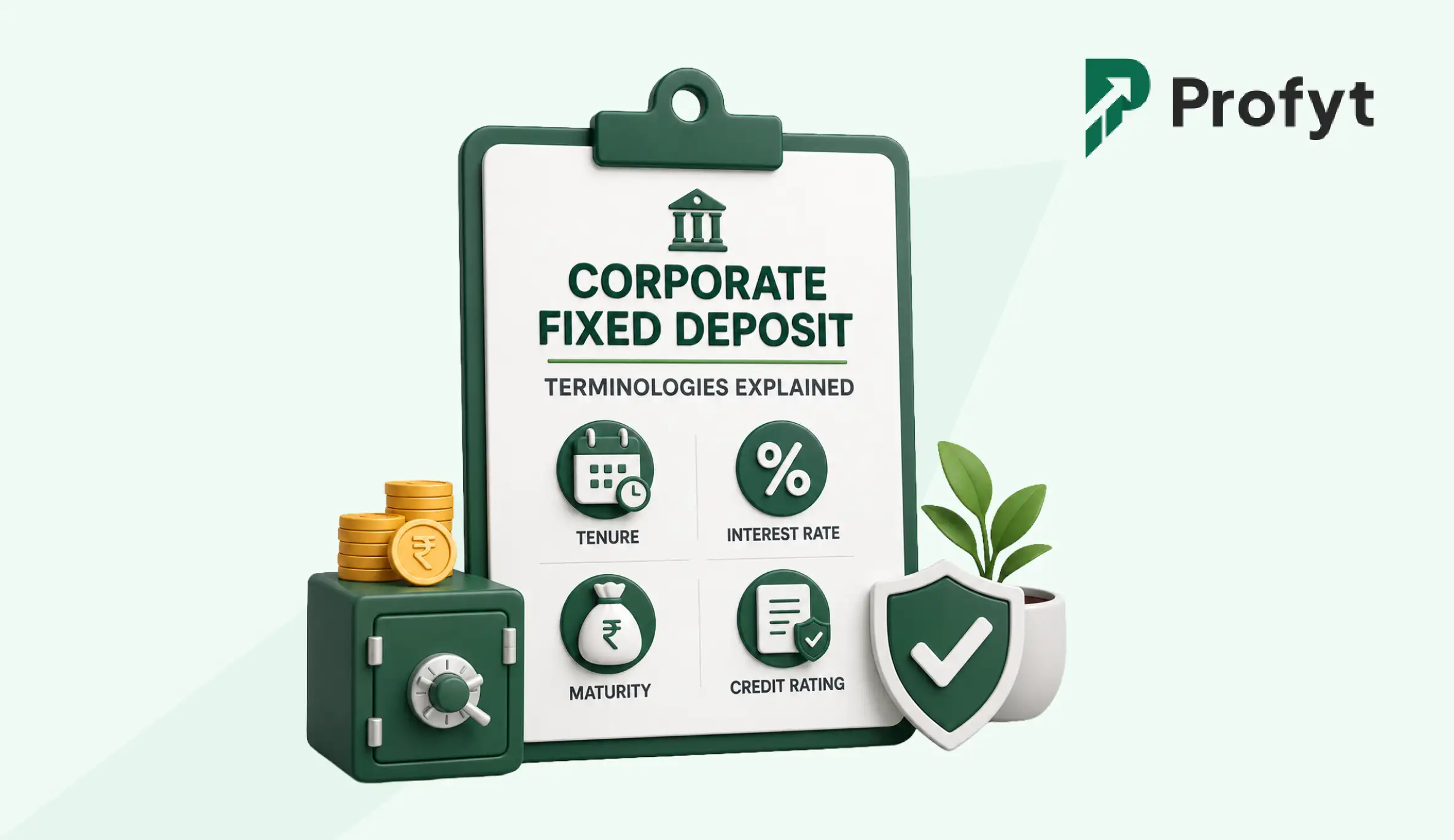
Investors often look beyond traditional savings options when planning their financial goals. While fixed deposits are among the most familiar investment products, many people are less aware of how Corporate Fixed Deposits (FDs) work and the terms associated with them.
For financial professionals and a Profyt app mutual fund distributor mutual fund agent, understanding these terminologies is important to explain investment options clearly and help clients make informed decisions. Corporate FDs come with their own set of terms related to interest rates, ratings, maturity, and risks that investors should understand before investing.
This guide explains common Corporate Fixed Deposit terminologies in simple language and highlights why they matter for investors and distributors.
What Are Corporate Fixed Deposits?
Corporate Fixed Deposits are fixed-income investment options offered by companies to raise funds from investors. Similar to bank FDs, investors deposit a fixed amount for a specific period and earn interest on their investment.
However, unlike bank deposits, Corporate FDs are issued by companies and may carry different levels of risk depending on the financial strength of the organisation.
Before recommending such products, a mutual fund agent should help investors understand important factors such as company credibility, credit ratings, tenure, and returns.
Important Corporate Fixed Deposit Terminologies Explained
Understanding the commonly used terms helps investors evaluate Corporate FDs better.
| Term | Meaning | Why It Matters |
|---|---|---|
| Issuer | The company offering the fixed deposit | Helps investors understand who is borrowing the money |
| Principal Amount | The initial amount invested by the investor | Determines the base investment value |
| Interest Rate | The return offered on the deposit | Helps compare potential earnings |
| Tenure | The period for which money remains invested | Impacts liquidity and returns |
| Maturity Date | The date when the deposit amount is repaid | Helps investors plan their finances |
| Credit Rating | Assessment of the company’s ability to repay debt | Indicates associated risk level |
Credit Rating: A Key Factor in Corporate FDs
Credit rating is one of the most important aspects investors should consider before investing in Corporate Fixed Deposits.
Rating agencies evaluate companies based on their financial position, repayment ability, and business performance.
Common rating categories include:
● AAA Rating: Indicates the highest level of creditworthiness
● AA Rating: Indicates strong ability to repay obligations
● A Rating: Represents adequate financial strength but with higher risk compared to AAA
● Lower ratings indicate higher credit risk
A higher interest rate may sometimes come with higher risk. Therefore, investors should not evaluate Corporate FDs only based on returns.
Understanding Interest-Related Terms in Corporate Fixed Deposits
Interest-related terms can sometimes confuse investors. A clear understanding helps in better financial planning.
1. Cumulative Interest
In a cumulative Corporate FD, interest is accumulated throughout the tenure and paid along with the principal amount at maturity.
Suitable for investors who:
● Do not need regular income
● Want to build wealth over time
● Prefer a lump-sum maturity amount
2. Non-Cumulative Interest
In a non-cumulative FD, interest is paid periodically, such as monthly, quarterly, half-yearly, or annually.
Suitable for investors who:
● Need regular income
● Prefer predictable cash flows
Secured vs Unsecured Corporate Fixed Deposits
Corporate FDs can be classified based on whether they are backed by company assets.
| Type | Explanation |
|---|---|
| Secured Corporate FD | Backed by company assets, offering additional security |
| Unsecured Corporate FD | Not backed by specific assets and may carry higher risk |
Investors should understand this difference before making investment decisions.
How a Profyt App Mutual Fund Distributor Mutual Fund Agent Can Help Investors
Financial decisions often become easier when investors receive proper guidance. A technology-enabled platform helps distributors manage client requirements efficiently.
A Profyt app mutual fund distributor mutual fund agent can support better investor servicing by helping distributors:
● Maintain client investment information
● Track investor requirements
● Improve communication
● Provide timely updates
● Manage relationships efficiently
For distributors handling multiple investors, digital tools reduce operational challenges and allow more time for meaningful financial conversations.
Important Factors to Evaluate Before Investing in Corporate FDs
Before investing in Corporate Fixed Deposits, investors should consider:
1. Company Financial Strength
Research the company’s:
● Business stability
● Financial performance
● Repayment history
2. Credit Rating
A good credit rating can indicate stronger repayment capability, but investors should still review other factors.
3. Investment Tenure
Choose a tenure based on financial goals and liquidity requirements.
4. Interest Rate Comparison
Compare offered returns with other available investment options while considering risk.
5. Diversification
Avoid investing a large portion of savings in a single company deposit. Diversifying investments can help manage risk.
Common Mistakes Investors Should Avoid
| Mistake | Better Approach |
|---|---|
| Choosing only based on high interest rates | Consider risk and company stability |
| Ignoring credit ratings | Review ratings before investing |
| Investing without understanding terms | Learn key FD concepts |
| Locking all funds for long periods | Maintain liquidity planning |
| Not reviewing issuer details | Research company background |
Why Financial Education Matters for Distributors
Investors increasingly seek guidance before making financial decisions. A knowledgeable distributor can add value by explaining products clearly instead of simply focusing on returns.
A successful mutual fund agent helps investors:
● Understand financial products
● Set realistic expectations
● Select suitable investment options
● Make informed decisions
Building investor trust through education can create stronger and longer-lasting relationships.
Conclusion
Understanding Corporate Fixed Deposit terminologies is essential for investors who want to make informed decisions and for professionals who guide them. Terms like credit rating, maturity period, interest type, and issuer details play an important role in evaluating these investment options.
With digital solutions like the Profyt app mutual fund distributor mutual fund agent platform, distributors can manage investor relationships better and provide more effective guidance.
A well-informed investor and a knowledgeable distributor together create a stronger financial ecosystem built on transparency, trust, and better decision-making.